
I Built a Hyrox Workout Logging App With Softr, Airtable, and Claude
How it's put together
All of the data lives in an Airtable database. If you look inside, there are users (just me for now), programs, and program sessions, which hold the session name, the summary, and the rest of the details. Softr is the front of house that controls how everything looks, and Airtable is the database everything gets pulled from. I also have a bunch of automations in Airtable that run different scripts when different things happen.
To seed it, I asked Claude to write me a four-week, six-week, eight-week, and twelve-week program. It did an okay job, but I'll be honest, it wasn't amazing, and I wouldn't recommend following its output directly. A couple of reasons: it gave me some back-to-back really hard days, and it didn't label the focuses correctly. When I think of a Hyrox workout, it's usually either an engine workout (an AMRAP or intervals), an easy zone 2 or recovery session, or a strength day. Claude didn't do a great job mapping those focus types to the actual workouts. That said, it came up with some genuinely interesting workouts that looked fun, so if you've been training for a while you can pick and choose. But if you want really good results, I'd still recommend working with a coach.
The app itself
The homepage automatically shows today's date and breaks everything down by focus, strength, engine, recovery, or easy cardio, and color-codes each one. If you haven't done something on a given day, you can either quick-log it or log a program workout.
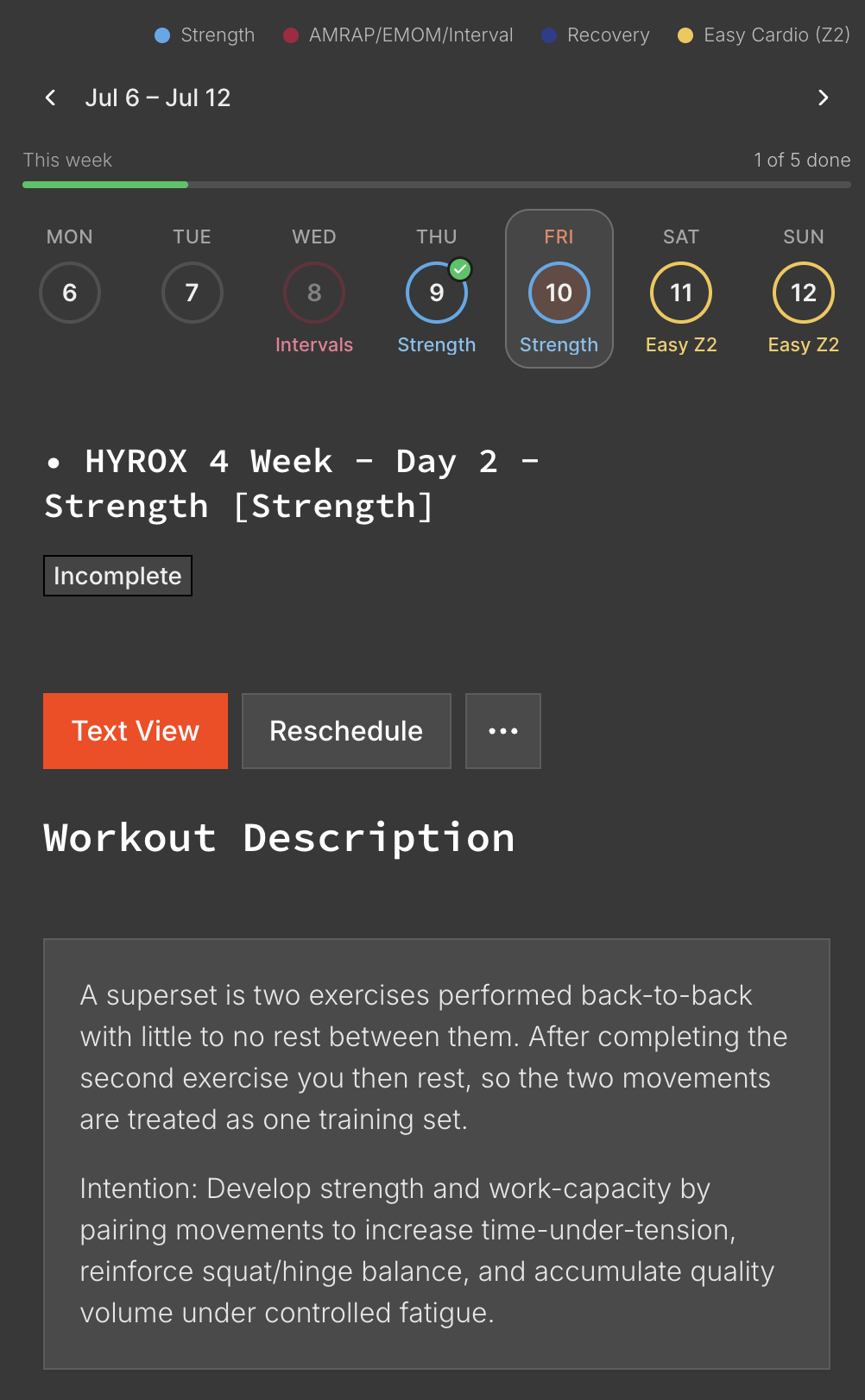
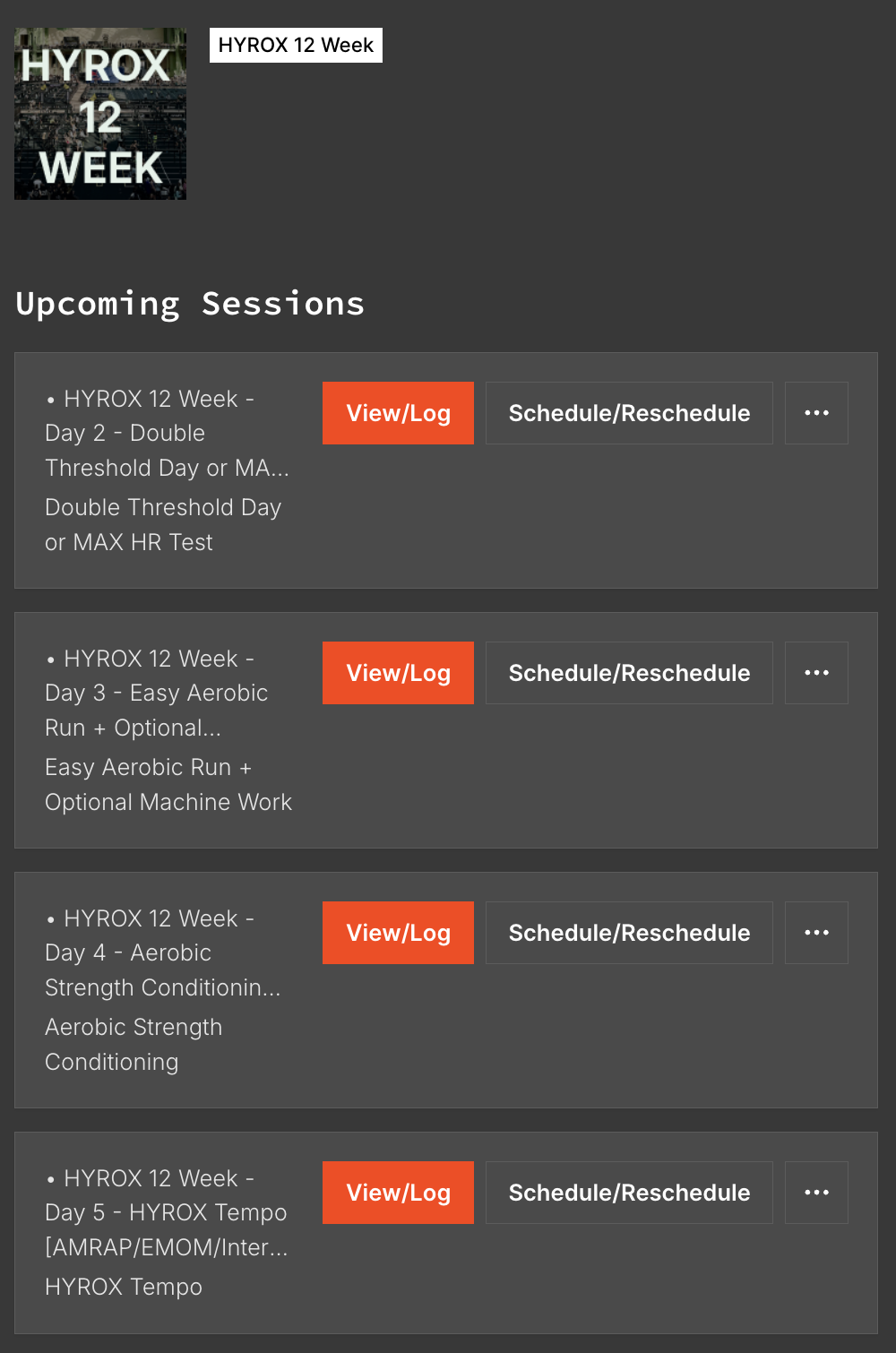
Each workout has a text view, the ability to reschedule to a different date, and a skip option that removes it from your calendar. There's a workout description (which ideally would link to a coach's video), a warm-up, and real state management for logging. You mark it complete and write in what you did, as detailed or as brief as you want, so you can look back later and understand how it went and what you modified.
One thing I've noticed training for Hyrox is how valuable it is to track progress by comparing a past session to where you think you are now. So the app pulls up your past strength or cardio sessions alongside the current one. Logging asks whether you completed or skipped it, how many minutes, how you felt, your RPE on a 1–10 scale, and a note, all editable later.
A few extras I added because I couldn't find good tools elsewhere:
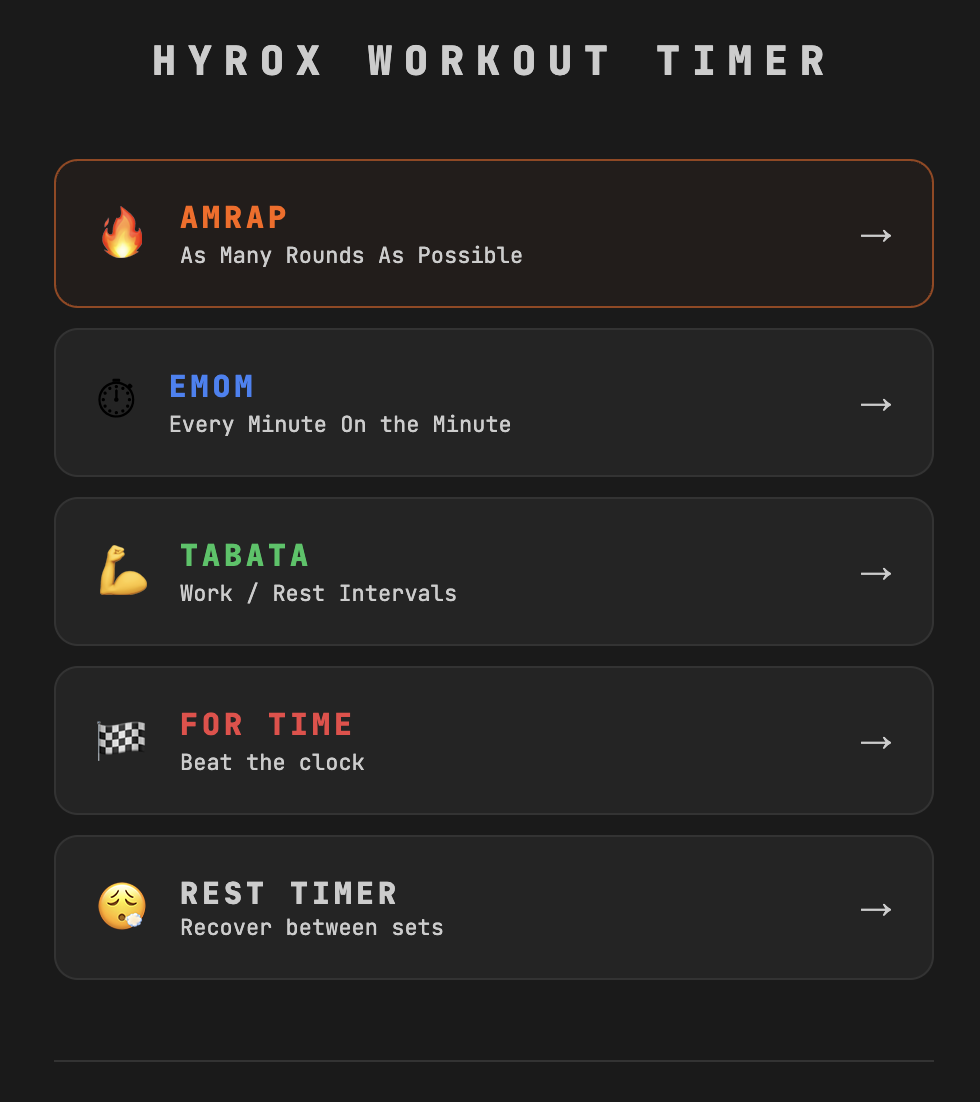
A live workout timer for EMOMs, Tabatas, and AMRAPs, with sounds, notifications, a 5-second warning, round increment/decrement, pause, reset, and a rest timer. Train Heroic has a solid one, but if you're doing your own thing you shouldn't need a clock on the wall.
An equipment substitutions guide (works far better on phone than desktop) for people who don't have a sled, or who are injured and need an alternative to running, like the assault bike, ski erg, or elliptical.
A quick-log flow for your own workouts, because life gets in the way and you won't always do what was prescribed.
A program picker and program management, so users answer a few questions about fitness, training history, and next race, then subscribe to a program broken out by experience level and type (new to Hyrox, base building, race prep). You can pause, complete, archive, or delete programs, with a caveat: don't run more than one active program at once or it'll clutter your dashboard.
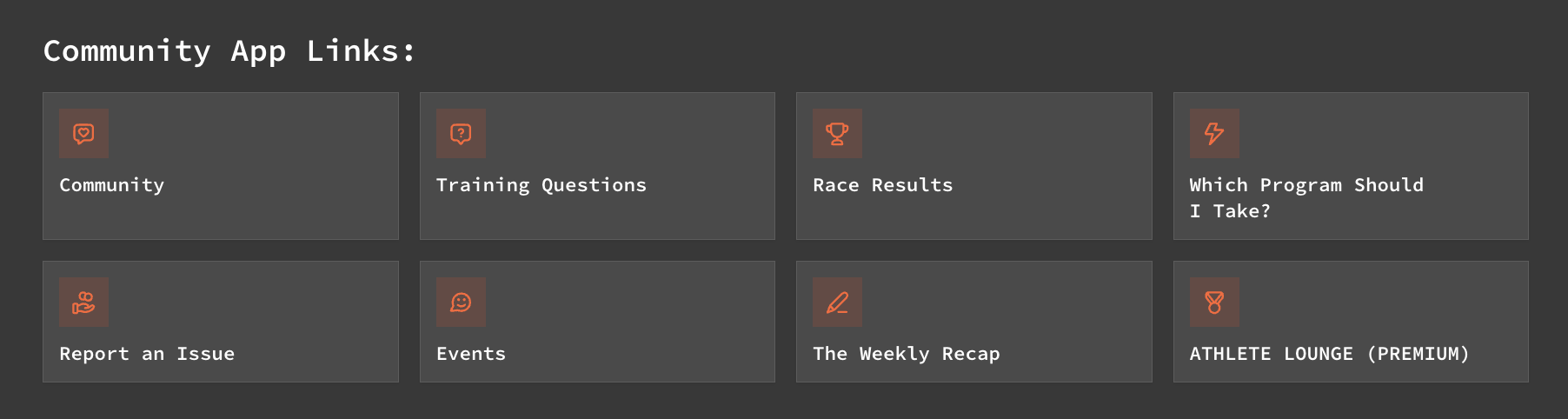
I also mapped out a community space with coach Q&A, event listings, weekly recaps, race results, and a premium athlete lounge, which is a natural next layer.
What I'd do differently
I started this about nine or ten months ago and put over a thousand hours into it. It was a great learning experience, but the AI tools back then weren't what they are now, Claude is far better today. I built a lot of the early version with ChatGPT and only used Claude toward the end.
If I started today, I'd use Claude and build the whole thing in React Native so it could ship to the App Store on both iOS and Android. I'd swap Airtable for Supabase to kill the lag time and make it faster and more reliable, host it on Vercel, and use the standard Git and GitHub.
For context, I was a web developer in a past life, mostly WordPress and front-end, with some object-oriented programming and app-development workflow knowledge from code school. Nine months ago there's no way I could have launched an app to the store, and I don't think the AI tools were there either. Now I'm actually building a React Native app with help from a React Native developer and a UI/UX person, but honestly, with a bit of tenacity, I think I could figure it out myself.
Parting advice
If you're thinking about a project like this, don't wait to get started, whatever it is. You'll learn along the way. Maybe you'll figure out it's not for you and move on, or maybe you'll finish it and get a real sense of achievement that leads to building other things. The world is really your oyster with this.