
I recently wrote about the AI follow-up agent I'm building for Gunther Klaus at Train by Design. It drafts a personal check-in the day after someone takes his quiz, and nothing sends until a person approves it.
That agent is version one. The more I build it, the clearer it gets that the follow-up is just the first job. The same foundation could run a lot more of a coaching business.
Automations vs. an AI-native CRM
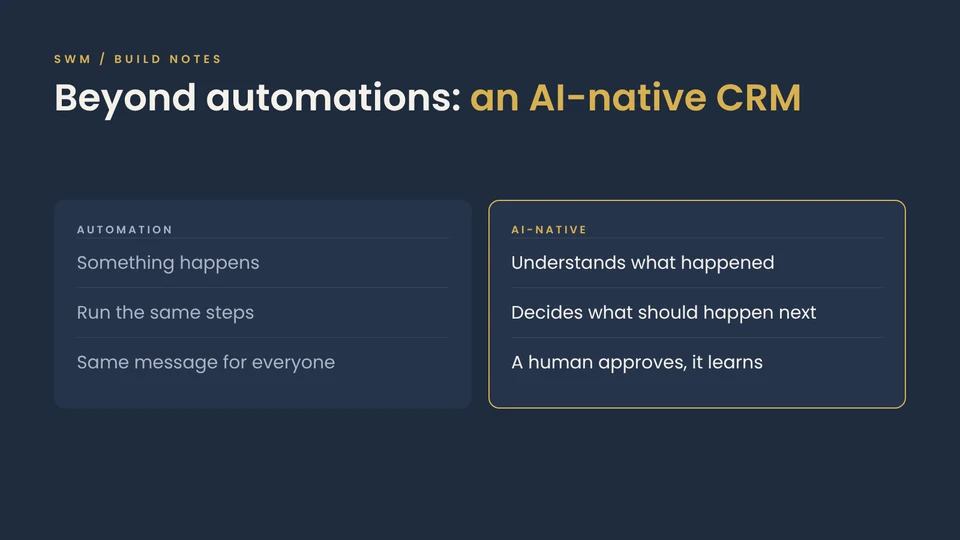
Most CRMs do two things. They store information, and they run automations you set up ahead of time. Someone joins a list, they get email one. Three days later, email two. It does exactly what you told it, every time, whether it fits or not.
An AI-native CRM works differently. It understands the person's context, looks at the situation, decides what should happen next, and then runs the right workflow.
Here's the simplest way I can put it:
- An automation does a task when something happens.
- An AI-native system understands what happened, figures out what should happen next, coordinates the work, and learns from the outcome.
That second one is a much bigger idea, and it's where I think coaching businesses are heading.
What it could look like
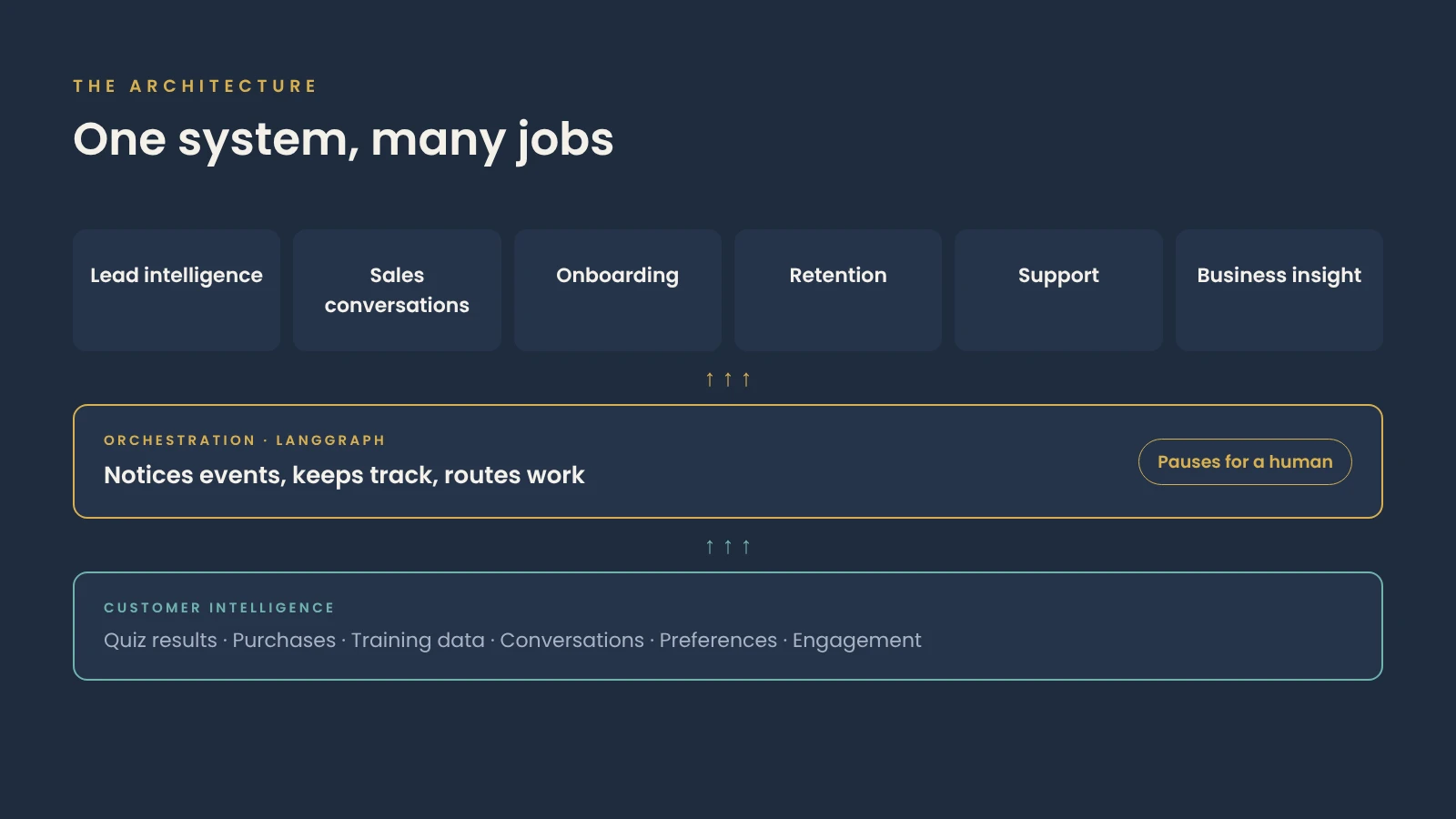
Picture it in three layers.
At the bottom is customer intelligence: quiz results, purchases, training data, conversations, preferences and engagement, all in one place.
In the middle is an orchestration layer (I'm using LangGraph). It notices events, keeps track of where every person is, routes the work and pauses for a human whenever it should.
On top are the jobs it does:
- Lead intelligence. When someone new comes in, the system builds an understanding of them: their quiz result, their goals, likely objections, what's missing, and the best next step. Someone who takes the quiz, has years of training behind them, asks about running and visits the coaching page twice is a high-intent lead, and should get a personal follow-up fast.
- Sales conversations. Instead of a fixed sequence, it helps manage the actual conversation. A lead asks about price, gets the approved pricing line, says it's too expensive. The system recognizes the objection, drafts a thoughtful reply, and the coach approves it. It remembers the whole thread.
- Onboarding. Someone buys coaching. The system pulls their quiz result and purchase, sends personalized onboarding, collects anything missing, and hands the coach a one-page summary instead of five tabs to piece together.
- Retention. A member hasn't logged a workout in ten days, hasn't opened an email in two weeks and complained about their program last month. Instead of a generic "We miss you!" email, the system connects those signals and suggests a personal check-in from the coach. Just as important, it can recognize when someone is on a planned recovery week and should be left alone.
- Support. Billing, access issues, account changes and simple program questions get answered from approved information, and anything it can't resolve goes straight to a person.
- Business insight. You could ask plain questions: Why aren't leads converting? Which quiz results turn into the best clients? Why are people cancelling? Which channels bring in the most valuable customers? You get an answer, not just a dashboard full of numbers.
Why it works as one system
The real advantage is that nothing is treated as an isolated task. A lead who becomes a client carries their whole story with them, from the quiz into sales, onboarding, coaching and support.
The system can remember context, pause for approval, pick up days later where it left off, and hand work between jobs. That's what LangGraph is good at: keeping state, checkpointing, human-in-the-loop steps, and smaller workflows inside bigger ones.
One thing worth being clear about: LangGraph isn't the CRM, and it isn't watching everything on its own. The CRM still holds the records. Webhooks, scheduled jobs and integrations feed events in. The orchestration layer decides what happens next.
| Layer | What it does |
|---|---|
| CRM | Customer records, deals, purchases, activity |
| Database | The lasting history and understanding of each customer |
| AI models | Understanding, sorting, reasoning and drafting |
| LangGraph | Workflow, memory, decisions and next steps |
Where it gets really interesting
The long-term payoff is a living understanding of every customer.
Imagine opening a member's record and seeing more than an email address and a tag. You'd see their main goal (improving their HYROX time), their biggest concern (running), an objection they raised once (price), how they like to communicate (direct and brief), and a recent change (training less than usual). Below that, a suggestion: a personal check-in from their coach.
That one picture of the customer helps with everything: sales, onboarding, support, retention and the coaching itself. The CRM stops being a contact list and starts being genuinely useful.
Why I'm building it one stage at a time
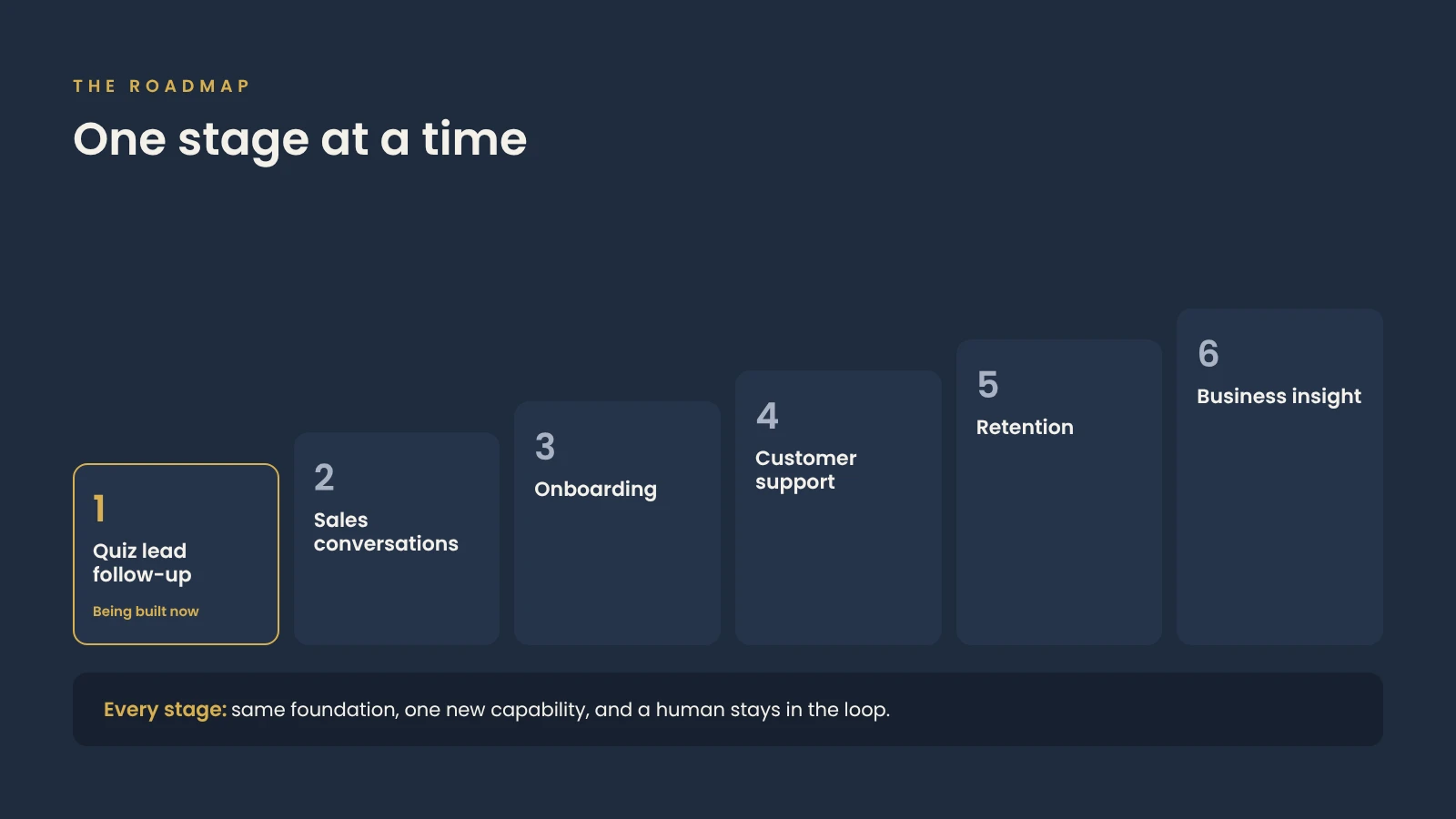
I wouldn't try to build all of this at once, and I'd be wary of anyone who pitches it that way. Here's the order I'd go in:
- Quiz lead follow-up (being built now)
- Sales conversations
- Onboarding
- Customer support
- Retention and churn prevention
- Business insight across everything
Each stage reuses the same foundation and adds one new capability. Each one has to earn its place before the next one starts.
And one rule carries through every stage: a human stays in the loop. The coach's voice is the business. The system drafts, suggests and organizes. The coach decides.
The short version
Automations are useful, but they're blind. They do the same thing no matter who's on the other end.
The next step for coaches isn't more automations. It's a system that actually understands the people in it, and helps the coach show up for each of them at the right moment.
If you're curious what the first stage would look like for your business, book a free call.
Want help building this into your business?